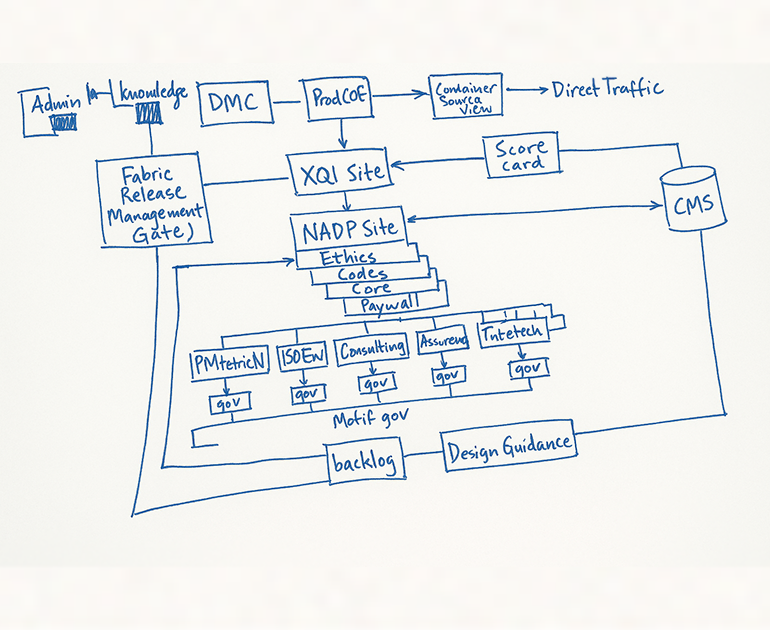
Tooling will change. Teams will shift. Paradigms will flip. You don’t rebuild for every wave—you build so the system can absorb the next one. We architect for evolution: layered contracts, modular assets, and clean separation of design, behavior, and delivery. That lets systems mutate without collapse—and makes room for what’s next. In later-stage work, we aligned the component system to the service architecture—so functional capabilities could be assembled from modular UI, logic, and data layers, each built for reuse and extension. Each layer—visual, behavioral, and service—could evolve independently. The system monitored changes, flagged mismatches, and routed decisions to the right domain for curation. The result was a living framework: modular, composable, and fluid. Built not just to scale—but to move with the teams, technologies, and products it supports. From infrastructure to orchestration—composing outcomes, not just assembling screens. Innovation doesn’t come from starting over. It comes from systems that were built to evolve.